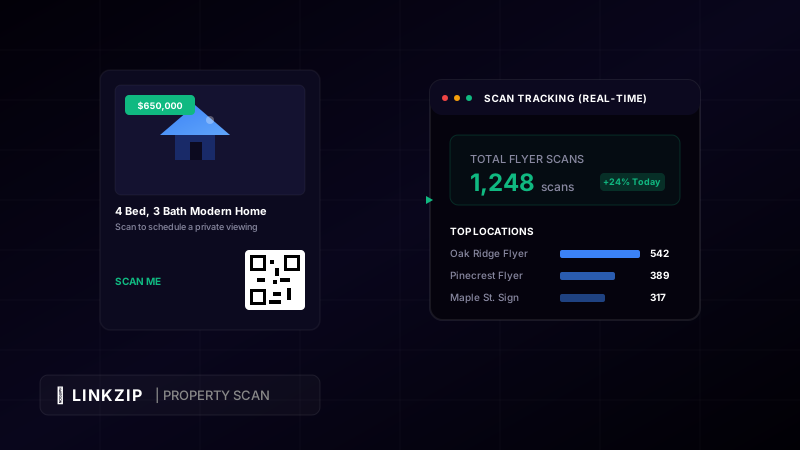
In the real estate industry, physical marketing remains a powerful driver of lead generation. From lawn signs and open house directional boards to high-gloss property flyers distributed at community centers, local businesses, and directly at the curb, print media is essential for capturing local homebuyer interest.
However, physical marketing has historically suffered from one major drawback: a lack of attribution.
How do real estate agents know if a flyer box placed on a front lawn is actually generating views? How can brokerage firms measure the return on investment (ROI) of a direct-mail postcard campaign? Historically, tracking these channels required clunky workarounds, like printing distinct phone numbers or hoping buyers mentioned how they found the listing.
Today, Quick Response (QR) codes have revolutionized print marketing attribution. By placing custom QR codes on flyers, listing signs, and mailers, agents can instantly bridge the gap between physical flyers and digital property portals.
In this article, we explain how to leverage dynamic QR codes for real estate flyers, why real-time scan tracking is vital for property marketing, and how to use LinkZip.uk to monitor and optimize your campaigns.
Static vs. Dynamic QR Codes: The Real Estate Dilemma
When implementing QR codes, many agents make the mistake of generating static QR codes. A static QR code encodes the target URL directly into the pixel pattern. Once printed, the destination cannot be changed.
For real estate, static QR codes present serious operational problems:
- Wasted Print Budget: If a property is sold, goes under contract, or undergoes a price reduction, you cannot update the link. All printed flyers pointing to that property page are rendered useless.
- Zero Analytics: Static QR codes do not pass through a redirect server, meaning you cannot track how many times the code was scanned, when it was scanned, or what devices were used.
The Solution: Dynamic QR Codes
A dynamic QR code does not point directly to the destination webpage. Instead, it points to a short, intermediary redirect URL (e.g., linkzip.uk/qr-prop1). When a user scans the code, they are instantly routed through the redirection server to the active property listing page.
Dynamic QR codes offer three massive advantages for real estate professionals:
- Infinite Editability: You can change the destination URL at any time without changing the QR code pattern. If the home sells, you can redirect the QR code to a “Similar Properties” landing page or an email capture form, saving hundreds of dollars in re-printing costs.
- Rich Analytics: Because the scan passes through a redirect manager, you can record real-time metrics, including the scan timestamp, the user’s geographic location, and their mobile operating system.
- Visual Simplicity: Because the encoded URL is short (e.g.,
linkzip.uk/q1), the QR code pattern remains clean and sparse. This makes the code much easier for smartphone cameras to scan from a distance or in low light.
Designing Property Flyers for Maximum QR Code Conversions
Simply slapping a QR code onto a corner of a property flyer will not guarantee scans. The design must encourage action. Follow these guidelines to optimize your flyer layout:
A. Establish a Clear Call-to-Action (CTA)
Never display a QR code in isolation. Always surround it with descriptive text that tells the buyer what they will get by scanning.
- Poor CTA: Scan Me
- High-Converting CTA: Scan for a 3D Virtual Tour & Floor Plan or Scan to Schedule a Private Showing
B. Size and Placement
Ensure the QR code is at least 1 inch by 1 inch (2.5 cm x 2.5 cm) on printed sheets. For yard signs, it needs to be much larger so buyers can scan it from their cars. Place the code in a prominent area, typically in the bottom-right corner or alongside property highlights.
C. Color Contrast and Brand Alignment
While traditional QR codes are black and white, modern generators allow you to customize the color palette. You can design QR codes that match your agency’s branding (e.g., navy blue, forest green, or charcoal). However, always maintain high contrast between the code pattern and the background to prevent scanning errors.
How to Set Up Property Scan Tracking with LinkZip.uk
Setting up scan tracking for your real estate listings is simple with LinkZip.uk. Here is a step-by-step implementation guide:
Step 1: Create a Redirect Link for the Property
Before printing your flyers, log into your LinkZip.uk account. Create a new redirect link using a clean slug that matches the property address:
<!-- Set up a clean redirect link that is easy to manage -->
<a href="https://linkzip.uk/102-maple-ave">View Listing Details</a>
Paste the destination URL (such as the MLS page, your agency site, or a dedicated single-property landing page) into the target field.
Step 2: Generate the Dynamic QR Code
Use a free QR code generator to create a custom SVG or PNG code pointing to your new LinkZip link. Many generators let you customize the eyes, color, and logo style to match your real estate brand’s visual identity.
Step 3: Print and Distribute
Insert the generated QR image into your flyer templates (e.g., in Canva, InDesign, or Photoshop) and print your marketing materials. Place them in property boxes, pass them out at open houses, and display them on yard signs.
Step 4: Track Scans in Real-Time
As buyers drive past the property and scan the flyers, check your LinkZip.uk dashboard to analyze traffic patterns:
// Sample structure of tracking data captured during a QR scan redirect
{
  "linkId": "102-maple-ave",
  "timestamp": "2026-06-10T14:32:01Z",
  "referrer": "QR_Code_Scan",
  "device": {
    "os": "iOS",
    "browser": "Safari Mobile"
  },
  "location": {
    "city": "Denver",
    "state": "Colorado"
  }
}
By reviewing this data, you can determine which locations, neighborhoods, or listing boards are generating the highest volume of buyer interest.
Real Estate Marketing Attribution Checklist
Use this table to map out your QR tracking strategy across different physical assets:
| Physical Asset | QR Target Destination | Key Metric to Track | ROI Metric |
|---|---|---|---|
| Curb Yard Sign | Virtual home tour video + listing price details | Curb-side interest & drive-by scans | Cost per yard-sign lead |
| Open House Flyer | Digital feedback form & digital brochure download | Attendee engagement & material downloads | Visitor feedback rate |
| Direct Mail Postcard | Private VIP showing scheduling portal | Mailer conversion rate & response speed | Cost per acquisition (CPA) |
| Neighborhood Board | Agency profile page & free home valuation tool | Brand awareness & local market inquiries | Value of seller leads |
Frequently Asked Questions (FAQ)
What happens if I print flyers but the listing goes off the market?
If you are using a dynamic QR code from LinkZip.uk, you do not need to throw away your flyers. Simply update the redirect destination in your LinkZip dashboard to point to an active listing, your general search portal, or a “Contact Agent” form. The printed code remains valid.
Can smartphone cameras scan QR codes in low light or from a vehicle?
Yes, provided the QR code is sufficiently large, has high color contrast, and uses a clean, dynamic URL. Because dynamic URLs are short, the QR code density is low, making it much easier for camera lenses to resolve in challenging lighting environments.
Do I need to buy expensive software to create dynamic real estate QR codes?
No. LinkZip.uk handles the redirection, editing, and scan tracking; pair it with any free QR code generator to produce the image, and the two together give you a fully dynamic, trackable QR code at no extra cost.
Create Dynamic QR Codes
Shorten your destination URL with LinkZip first to make your printed QR codes dynamic. Update your destination link anytime without reprinting.
Generate Dynamic LinksConclusion
Incorporating dynamic QR codes into your real estate flyers bridges the gap between traditional print advertising and modern digital analytics. By replacing static links with dynamic redirects from LinkZip.uk, you protect your print marketing budget, adapt to changing property listings in real-time, and gain invaluable insights into buyer behavior. Start tracking your flyers today and transform your print materials into highly attributable, lead-capturing marketing assets.