
For content creators, the link in your social media bio is your digital storefront. Whether you are on Instagram, TikTok, Twitter, or YouTube, that single URL is the bridge between your social media audience and your website, digital products, newsletters, and partnerships.
Because of this, many creators use “link-in-bio” tools to aggregate multiple destinations onto one page. However, while these tools are great for redirecting users, most creators miss a massive source of free traffic: Search Engine Optimization (SEO).
With proper SEO practices, your link-in-bio landing page can index and rank on Google. This means people searching for your niche, your brand name, or your digital products can discover your links directly through search results—even if they do not follow you on social media yet.
In this article, we will break down the mechanics of Link-in-Bio SEO and show you how to optimize your profiles to drive organic search traffic.
Why Most Link-in-Bio Pages Do Not Rank on Google
If you search for your username or niche on Google, you might notice that your link-in-bio page is nowhere to be found. This happens because standard link-in-bio platforms ignore SEO best practices:
- No-Index Tags: Many generic platforms block search engine crawlers from indexing user profiles to save bandwidth. This tells Google to ignore your page entirely.
- Generic Subdomains: Hosting your links on
generictool.com/yournamepasses all the SEO authority (domain rating) to the platform, not to your personal brand. - Missing Metadata: Standard tools do not allow you to write custom page titles, meta descriptions, or alt tags for your images.
- Poor Link Anchor Text: Using vague button labels like “Click Here” or “My Website” prevents Google from understanding the context of your links.
To fix these issues, you need a search-friendly setup that gives you full control over your page metadata and domain authority.
4 Steps to Optimize Your Link-in-Bio for Search
By treating your link list like a mini-landing page, you can turn it into an organic search asset. Follow these four optimization strategies:
1. Map a Custom branded Domain
Using a custom domain (e.g., links.yourdomain.com or yourname.click) instead of a generic platform subdomain is the single most powerful SEO move you can make.
When search engines index your custom domain, any link authority you build goes directly to your brand. Furthermore, custom domains are far more memorable and look professional to brands looking to collaborate with you.
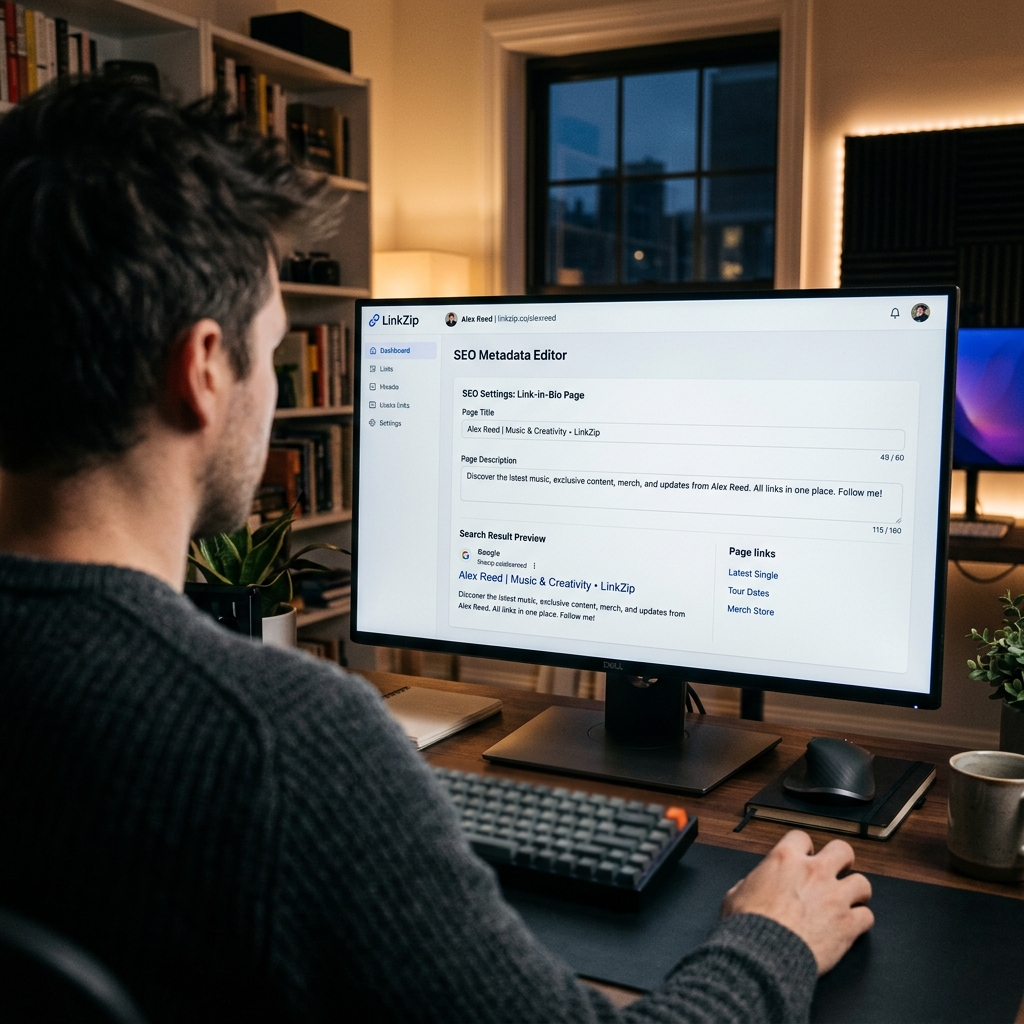
2. Customize Page Titles and Meta Descriptions
Just like any standard blog post or product page, your bio link page needs optimized meta tags. Google displays these tags in search results:
- Page Title: Instead of just your username, include a keyword that defines your niche (e.g., Jane Doe | Plant-Based Recipes & Vegan Cookbooks instead of Jane’s Links).
- Meta Description: Write a compelling, keyword-rich summary explaining what visitors will find (e.g., Explore vegan recipes, download my free meal-prep guide, and browse my favorite kitchen tools.).
3. Use Descriptive Keyword Anchor Text
Google crawls the text inside your buttons to understand the destinations you link to. Avoid generic labels:
- Weak Anchor:
My Shop - Strong Anchor:
Shop Eco-Friendly Home Decor - Weak Anchor:
Free PDF - Strong Anchor:
Download the Free 7-Day Travel Itinerary
Descriptive anchor text tells Google exactly what the target page is about, improving the search ranking of both your bio page and the target website.
4. Keep Layouts Lightweight and Mobile-Friendly
Over 90% of your social media audience accesses your links from mobile devices. Google prioritizes mobile page speed as a ranking factor (Core Web Vitals).
Avoid adding heavy videos, unoptimized high-res images, or tracking scripts to your bio page. Keep your layouts clean, fast, and structured with clear HTML headings.
Choosing a Search-Friendly Link Tool
If you want your digital profiles to rank, you must choose a link platform that supports these custom optimizations. A good tool should offer:
- Indexability: Google crawlers must be allowed to read and index your page.
- Custom Meta Editor: Ability to write custom SEO page titles, meta descriptions, and Open Graph tags for social previews.
- Custom Domain Mapping: DNS support to point your own short domain to the platform.
- CSS Customization: Flexibility to design a high-end interface without heavy bloated scripts.
By adopting a professional link management service like LinkZip.uk for the individual links on your page, content creators can gain complete visibility over their traffic, secure their commissions, and maintain brand consistency across all channels. LinkZip itself doesn’t build or host link-in-bio pages — it shortens and tracks the links you place on whichever page builder you choose, so pair it with a page that follows the SEO practices above.
Optimize your social bio page for search engines today and start driving free, organic traffic from Google!