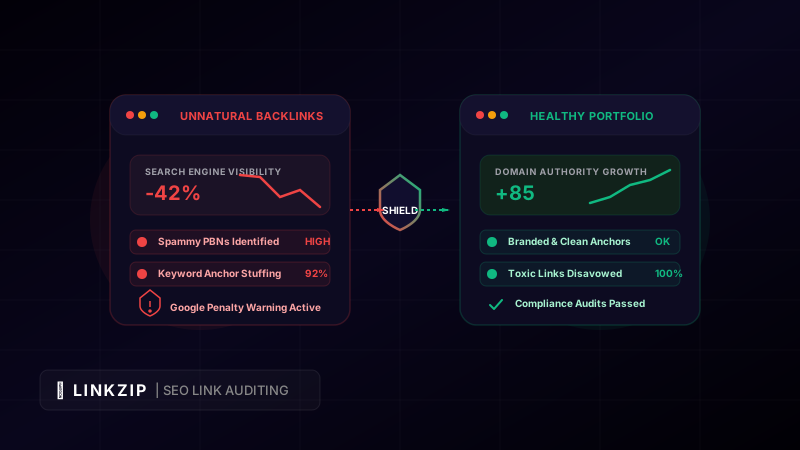
In search engine optimization (SEO), backlinks are widely considered the currency of authority. Since the inception of Google’s PageRank algorithm, search engines have used links from external websites as “votes of confidence.” In simple terms: the more high-quality websites that link to your content, the more trustworthy and authoritative your website appears, leading to higher rankings in search results.
Because backlinks are so powerful, they have also become a primary target for manipulation. Over the years, search engines have grown incredibly sophisticated at distinguishing natural, earned editorial links from artificial, manipulative link schemes. Today, Google’s AI-powered Webspam Brain and SpamBrain systems detect spam patterns in real-time, penalizing websites that engage in deceptive link acquisition.
Understanding how to build a healthy link profile without crossing the line into “spam” is critical for long-term SEO success. In this guide, we cover the seven most common link building mistakes that trigger search engine penalties, how to audit your backlink profile, and how to build links safely using modern best practices.
1. Google’s Algorithmic Stance on Unnatural Links
Google’s Webmaster Guidelines (now called Google Search Essentials) are very clear: any link intended to manipulate PageRank or a site’s ranking in Google search results may be considered part of a link scheme and a violation of Google’s guidelines.
Historically, Google addressed link spam through major algorithmic updates like Google Penguin (released in 2012), which targeted sites using keyword-stuffed anchor texts, low-quality directories, and link networks. Today, Penguin is integrated into Google’s core algorithm, meaning it evaluates links and adjusts rankings in real-time. If Google detects unnatural links pointing to your site, it may ignore those links entirely (causing your rankings to drop as authority is lost), or it may issue a manual action penalty, which can remove your site from search results completely.
2. The 7 Deadliest Link Building Mistakes
Avoiding penalties requires avoiding the tactics that trigger spam filters. Here are the seven most common mistakes webmasters make:
Mistake 1: Buying Cheap Backlink Packages
It is tempting to go on marketplaces like Fiverr or SEO forums and buy packages promising “1,000 High-DA Backlinks for $10.” These services use automated software to blast your URL onto low-quality blog comments, spammy forum profiles, and link directories. Search engine bots identify these patterns instantly, and these links will either be ignored or trigger a manual penalty.
Mistake 2: Over-Optimizing Anchor Text
Anchor text is the visible, clickable text in a hyperlink. Historically, using exact-match keywords (e.g., linking the phrase “best cheap running shoes” to your product page) helped you rank for that term. However, if 80% of your incoming backlinks use the exact same keyword anchor text, it looks highly unnatural. A natural link profile includes a mix of branded anchors (your brand name), raw URLs, and generic phrases like “click here” or “source.”
Mistake 3: Acquiring Links from Irrelevant Niches
Relevance is key to modern SEO. If you run a local bakery website, getting a backlink from a financial technology blog or a car repair forum makes no sense. Search engines evaluate the contextual relevance of both the linking page and the target page. Backlinks from irrelevant sites provide little to no ranking authority and can look like spam.
Mistake 4: Ignoring the Ratio of DoFollow vs. NoFollow Links
By default, links are “DoFollow,” meaning they pass search engine authority (link equity). “NoFollow” links (using the rel="nofollow" attribute) tell search engines not to pass authority. A natural backlink profile always contains a mix of both. If your website has thousands of DoFollow links but zero NoFollow links, it suggests your links were manually placed or purchased rather than earned naturally.
Mistake 5: Relying on Public Blog Networks (PBNs)
A Private Blog Network is a group of websites built solely to link to a primary site and boost its rankings. PBN owners often buy expired domains with existing authority and populate them with low-quality content. Google dedicates significant resources to identifying and deindexing PBN networks. If your site relies on PBN links, your rankings could disappear overnight.
Mistake 6: Neglecting Link Audits and Toxic Link Removal
Even if you do not actively build spammy links, competitor sites or automated bots may link to you. Neglecting to audit your link profile periodically allows toxic backlinks to accumulate, which can slowly erode your search visibility.
Mistake 7: Participating in Excessive Link Exchanges
Exchanging links with other sites (“link to me and I will link to you”) is fine in moderation if the sites are relevant. However, participating in large-scale link exchanges or “web rings” designed solely for cross-linking violates Google’s search policies and can trigger flags.
3. How to Audit and Clean Your Link Profile
If you suspect your site has been hit by a link penalty or has accumulated toxic backlinks, you should conduct a backlink audit:
- Export Your Link Profile: Use tools like Google Search Console, Ahrefs, SEMrush, or Moz to download a list of all external websites linking to yours.
- Identify Toxic Domains: Look for links from adult sites, gambling sites, foreign language sites with no relevance, or domains with extremely low domain authority and high spam scores.
- Request Link Removal: For sites you have control over or can contact, ask the webmaster to remove the link or change it to a
nofollowlink. - Create and Submit a Disavow File: If you cannot get the links removed, create a plain text disavow file listing the toxic domains and submit it through Google Search Console. This tells Google to ignore those links when evaluating your site.
<!-- Example of a standard LinkZip redirect format used to monitor external clicks safely -->
<!-- Use this structure in your partner networks to track incoming referral value -->
<a href="https://linkzip.uk/partner-audit?utm_source=blog&utm_medium=article&utm_campaign=seo-mistakes">
Read SEO Case Study
</a>Link Quality Comparison Table
Use this table as a reference guide to evaluate the quality and risk profile of your backlinks:
| Link Metric | High Quality (Safe) | Medium Quality (Caution) | Low Quality (Avoid / Disavow) |
|---|---|---|---|
| Domain Relevance | Highly relevant to your niche | Broadly related or general news site | Completely unrelated or spam niche |
| Anchor Text | Branded or natural phrases | Semi-branded or keyword variations | Exact-match keywords stuffed |
| Site Traffic | Consistent organic search traffic | Low traffic but real audience | Zero traffic, placeholder site |
| Link Placement | In-content, editorial context | Author bio, sidebar widgets | Footer links, spam comments |
| Domain History | Clean history, active for years | Newly registered, limited content | Expired domain rebuilt for PBN |
4. Best Practices for Risk-Free Link Building
Building links safely requires focusing on quality, relevance, and value. Here are the best ways to earn links naturally:
- Create Linkable Assets: Publish original research, in-depth guides, infographics, or free tools (like calculators or templates) that other webmasters will want to reference and link to.
- Conduct Direct Outreach: Find blogs in your industry that reference topics you have written about, and suggest your high-quality resource as an additional reference.
- Write High-Value Guest Posts: Contribute articles to respected, established publications in your niche. Ensure the links back to your site are contextual and helpful to the reader.
- Centralize Affiliate and Partner Links: If you work with external partners, use a centralized redirection tool like LinkZip.uk to monitor incoming traffic quality. This helps you identify if a partner is driving low-quality or spammy traffic to your site, allowing you to pause or redirect the link instantly.
Optimize Your Link CTR Today
Turn long, messy URLs into clean, branded, and trackable links in seconds with LinkZip. Boost your conversions and protect your brand.
Get Started FreeConclusion
Link building remains a cornerstone of SEO, but shortcuts can lead to severe penalties. By avoiding low-quality shortcuts, monitoring your backlink profile, and focusing on creating valuable content, you can build a strong, penalty-resistant link profile. Protect your search rankings, focus on editorial quality, and use LinkZip to manage and analyze your external links safely.